
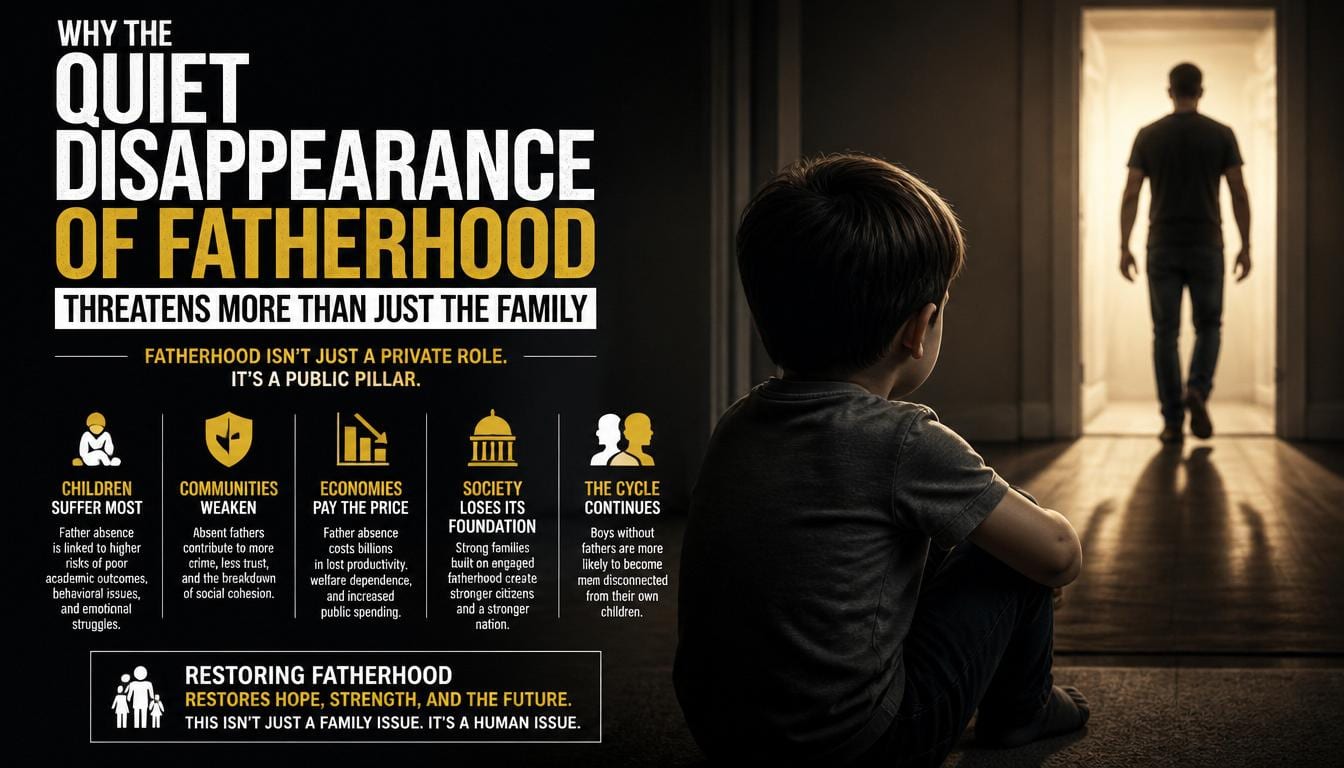
The figure of the father is quietly disappearing from modern family life — and the consequences of that absence ripple outward in ways society has been slow to reckon with. Christian teaching has long held that human fatherhood draws its deepest meaning from God himself, the Father from whom, as St. Paul wrote, every family in heaven and on earth takes its name. When that divine origin is forgotten, fatherhood loses not just its dignity but its very shape.
The family grounded in marriage is not a cultural preference among many — it is, according to this vision, the only arrangement that truly honors the irreversible commitment love demands. So-called informal unions, however normalized they have become in law and custom, are marked by a reluctance to bind oneself fully to another person. That half-given commitment cannot bear the full weight of raising children, who need not just shelter and provision but the witness of two parents whose love is permanent, not provisional.
The pressures on the family take other forms too. Wealthy societies especially have grown fearful of parenthood itself, treating the generation of new life as a problem to be managed rather than a gift to be received. And many parents, anxious to remain close to their children, drift from their proper role — avoiding correction, sidestepping hard truths — when what children actually need is warm, honest guidance rooted in example.
Fatherhood and motherhood are, by their nature, inseparable — each calls forth the other, and together they reflect the creative generosity of God. That bond, honored and protected, remains the cornerstone not only of the family but of a society capable of recognizing human dignity at all. |
0 Comments
Join the conversation
Be the first to comment
Share your thoughts above.